Driveways and Walks Cleared During Winter Weather
Snow Removal in Valparaiso for residential properties with long driveways, sloped access routes, and high-traffic walkways
Accumulation from lake-effect storms moves inland from Lake Michigan and drops variable snow depths across Valparaiso throughout winter months, often arriving overnight or during early morning hours. Eclipse Outdoor handles snow removal for properties where driveway length, slope grade, or access requirements make manual clearing impractical or unsafe. The service restores vehicle access and clears pedestrian routes before morning departure times or business opening hours.
Removal work uses plow equipment sized appropriately for residential driveways, avoiding the heavy machinery that damages pavers or asphalt edges. Operators clear snow down to pavement surface on flat sections and leave a thin compacted layer on slopes to maintain traction without creating ice-sheet conditions. Walkway clearing involves mechanical blowers or shoveling depending on width and proximity to plantings.
Request a site assessment to establish trigger depths, priority areas, and equipment access points before the first measurable snowfall.
How Snow Removal Services Operate During Storms
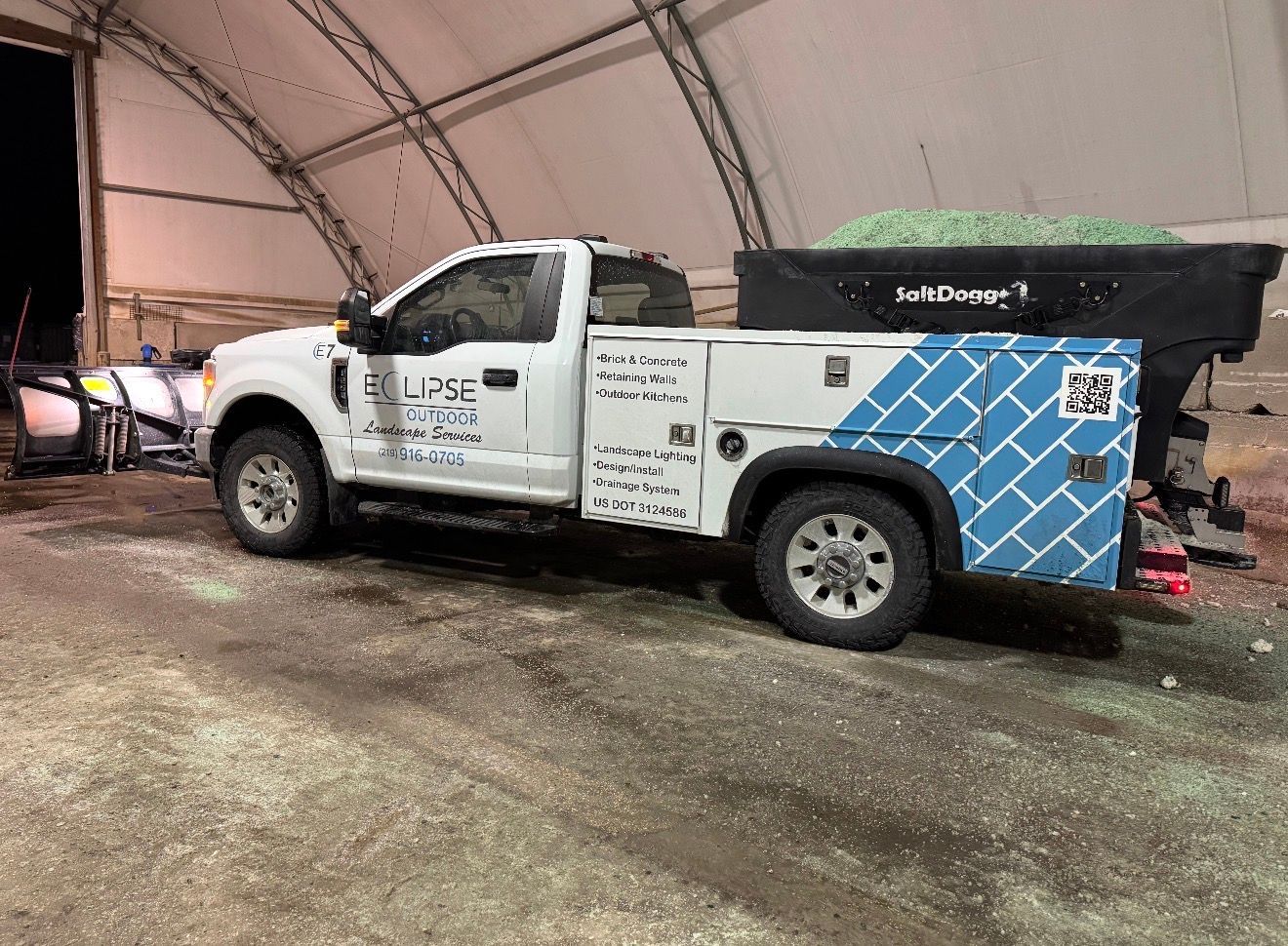
Service begins when accumulation reaches the predetermined trigger depth, typically between two and four inches depending on client preference and property usage patterns. Plowing follows driveway edges and established pushback areas where snow can be stacked without blocking sight lines or covering landscaping. Walks and entry areas are cleared after plowing to avoid redepositing snow on cleaned surfaces.
Once work finishes, your driveway shows clear tire tracks down to pavement, walkways are passable without snow compression underfoot, and snow piles sit in designated areas away from drainage paths and mailbox access. Properties with longer driveways notice immediate difference in vehicle traction and turning ability, especially on sections with grade changes where uncleared snow creates slide zones.
Repeat visits occur during extended storm events when accumulation continues past initial clearing. De-icing application is separate from snow removal and requires specific material choices based on pavement type, planted area proximity, and temperature range during application.
Answers to Frequent Service Questions
Homeowners preparing for winter often have specific questions about how removal services work and what to expect during storm events.
- What determines when plowing begins at my property? Plowing starts when snow depth reaches the agreed trigger point, measured in undrifted areas of the driveway. Most residential services set triggers between two and four inches to balance cost with access needs.
- How does equipment avoid damaging driveway edges or pavers? Operators use plow shoes or skid plates that ride slightly above the pavement surface, preventing blade contact with asphalt seams, paver edges, or decorative borders. Proper equipment setup leaves a thin snow layer rather than scraping to bare pavement.
- Where does plowed snow get pushed on residential properties? Snow is pushed to predetermined stacking areas identified during the pre-season site visit, typically lawn edges, landscape bed perimeters, or property corners where accumulation doesn't block visibility or drainage flow when melting occurs.
- What happens during storms that drop snow over multiple days? Extended storms require multiple visits as accumulation builds, with each pass clearing recent snowfall before it compacts into dense layers that require more aggressive equipment or create traction hazards on slopes.
- How does lake-effect snow in Valparaiso affect service timing? Lake-effect patterns produce narrow bands of heavy accumulation that vary by neighborhood, meaning trigger depths may be reached at different times across the service area even during the same storm system moving off the lake.
Eclipse Outdoor monitors local weather patterns and coordinates removal timing based on forecast models specific to Porter County's lake-effect zones. Contact us to establish service parameters and stacking locations before seasonal weather begins.